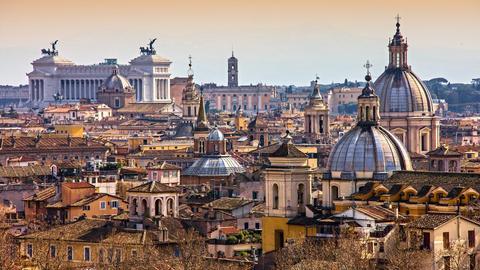
Italy · Europe
Discover Rome with Rafeek
Rome is the capital city and most populated comune of Italy.


Seeing Rome without the story is only half the trip
The problem
Group tours run on someone else's clock, printed signs say too little, and searching for context on your phone pulls you out of the moment. Most travellers leave Rome with photos but no sense of what they actually saw.
How Rafeek fixes it
Rafeek is a personal audio guide in your pocket. Press play at each landmark in Rome, listen at your own pace, and keep your eyes on the place instead of a screen. Guides work offline, so no roaming or signal worries.
What you'll discover in Rome
52 landmarks with their own audio guide — tap any one to read what you'll hear.
/Appian%20Way%20(Via%20Appia%20Antica).jpg)
Appian Way (Via Appia Antica)
One of the earliest and most important Roman roads, connecting Rome to Brindisi in southeast Italy. Today, this ancient cobblestone road is part of a regional park, lined with ancient tombs, catacombs, and monuments, offering a unique journey back in time.
/Ara%20Pacis%20Augustae%20(Altar%20of%20Augustan%20Peace).jpg)
Ara Pacis Augustae (Altar of Augustan Peace)
An ancient altar dedicated to Pax, the Roman goddess of Peace, commissioned to celebrate the peace established by Emperor Augustus. The intricately carved marble monument is now housed in a modern museum building designed by architect Richard Meier.
/Archbasilica%20of%20Saint%20John%20Lateran%20(Arcibasilica%20di%20San%20Giovanni%20in%20Laterano).jpg)
Archbasilica of Saint John Lateran (Arcibasilica di San Giovanni in Laterano)
The official cathedral church of Rome and the seat of the Pope as Bishop of Rome. As the oldest and highest-ranking of the four major papal basilicas, it is considered the mother church of all Catholic churches worldwide.
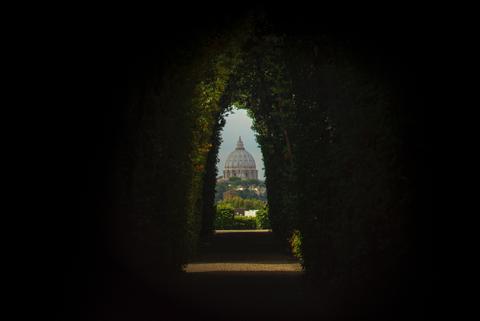
Aventine Keyhole
A unique and secret attraction found on the Aventine Hill at the door of the Priory of the Knights of Malta. Peeking through this small keyhole reveals a perfectly framed view of the dome of St. Peter's Basilica at the end of a garden path.
/Basilica%20of%20Saint%20Mary%20Major%20(Basilica%20di%20Santa%20Maria%20Maggiore).jpg)
Basilica of Saint Mary Major (Basilica di Santa Maria Maggiore)
One of the four major papal basilicas in Rome and the largest Catholic Marian church in the city. It is renowned for its stunning 5th-century mosaics depicting Old Testament scenes and its opulent Baroque ceilings, allegedly gilded with gold brought from the Americas.
/Basilica%20of%20Saint%20Paul%20Outside%20the%20Walls%20(Basilica%20di%20San%20Paolo%20Fuori%20le%20Mura).jpg)
Basilica of Saint Paul Outside the Walls (Basilica di San Paolo Fuori le Mura)
One of Rome's four major papal basilicas, built over the burial place of Saint Paul the Apostle. It is known for its beautiful 13th-century cloister and a striking series of mosaic portraits of every pope since St. Peter.
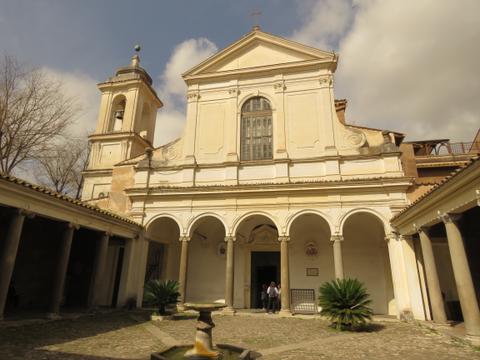
Basilica of San Clemente al Laterano
A fascinating church that represents a journey through time, built on a three-tiered complex of buildings. The current 12th-century basilica sits atop a 4th-century church, which in turn was built over a 1st-century Roman house containing a Mithraic temple.
/Baths%20of%20Caracalla%20(Terme%20di%20Caracalla).jpg)
Baths of Caracalla (Terme di Caracalla)
The second-largest Roman public baths, built in the 3rd century AD, which were a massive complex for bathing, socializing, and exercise. The extensive and impressive ruins are now a popular tourist site and a venue for outdoor opera and concerts in the summer.
/Baths%20of%20Diocletian%20(Terme%20di%20Diocleziano).jpg)
Baths of Diocletian (Terme di Diocleziano)
The largest and most lavish of the imperial baths in ancient Rome, now housing a section of the National Roman Museum. The complex also contains the Basilica of Santa Maria degli Angeli e dei Martiri, ingeniously designed by Michelangelo within the ruins of the bath's frigidarium.
/Bocca%20della%20Verita%20(Mouth%20of%20Truth).jpg)
Bocca della Verità (Mouth of Truth)
An ancient marble mask located in the portico of the Santa Maria in Cosmedin church. Famous for its legend, it is said that the mouth will bite off the hand of any liar, making it a popular and fun photo opportunity for visitors.
/Borghese%20Gallery%20and%20Museum%20(Galleria%20Borghese).jpg)
Borghese Gallery and Museum (Galleria Borghese)
An art gallery housed in the former Villa Borghese Pinciana, renowned for its collection of masterpieces by Bernini, Caravaggio, Raphael, and Titian. The gallery offers an intimate viewing experience, as visitor numbers are strictly limited, making reservations essential.
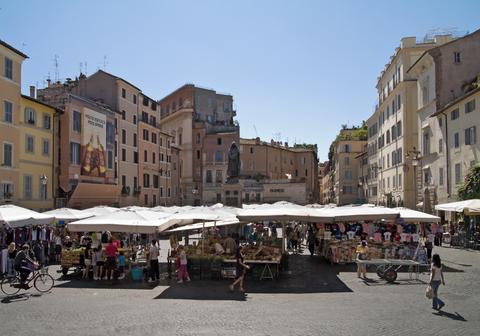
Campo de' Fiori
A vibrant square that hosts a famous market with fresh produce, flowers, and local delicacies by day. At night, it transforms into a lively hub for dining and socializing, with a statue of philosopher Giordano Bruno at its center.
/Capitoline%20Museums%20(Musei%20Capitolini).jpg)
Capitoline Museums (Musei Capitolini)
A group of art and archaeological museums located on top of the Capitoline Hill, considered the world's first public museum. Its collection includes a vast number of ancient Roman statues, inscriptions, and artifacts, including the iconic bronze equestrian statue of Marcus Aurelius.
/Castel%20SantAngelo%20(Mausoleum%20of%20Hadrian).jpg)
Castel Sant'Angelo (Mausoleum of Hadrian)
A towering cylindrical fortress on the banks of the Tiber River, originally built as a mausoleum for the Emperor Hadrian. Over the centuries, it has served as a papal fortress, castle, and prison, and is now a museum offering stunning views of the city.
/Catacombs%20of%20Rome%20(Catacombe%20di%20Roma).jpg)
Catacombs of Rome (Catacombe di Roma)
Ancient underground burial places used by early Christians and Jewish communities. These extensive networks of tunnels contain thousands of tombs and some of the earliest examples of Christian art. The most famous include the Catacombs of Callixtus and Domitilla.
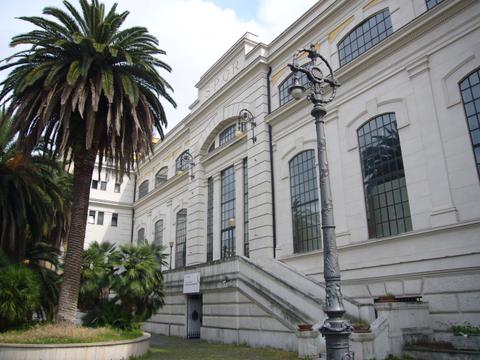
Centrale Montemartini
A former power plant that now serves as a unique exhibition space for a part of the Capitoline Museums' collection. The museum creates a striking contrast by displaying classical sculptures, such as ancient Roman statues, amidst the preserved industrial machinery.
/Circus%20Maximus%20(Circo%20Massimo).jpg)
Circus Maximus (Circo Massimo)
An ancient Roman chariot-racing stadium and mass entertainment venue, it was the largest stadium in the Roman Empire. Today, the site is a large public park, where the outline of the original track is still visible, often used for concerts and large public events.
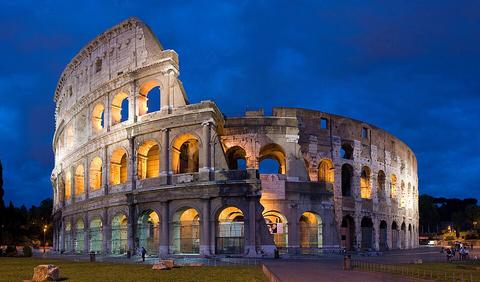
Colosseum
The largest ancient amphitheater ever built, and still the largest standing amphitheater in the world today. A part of the UNESCO World Heritage site, it was famously used for gladiatorial contests, public spectacles, and mock sea battles.
/Domus%20Aurea%20(Neros%20Golden%20House).jpg)
Domus Aurea (Nero's Golden House)
The vast landscaped palace built by Emperor Nero after the Great Fire of 64 AD. Visitors can explore the excavated ruins of this once-opulent complex through guided tours that use virtual reality to reconstruct its original splendor.
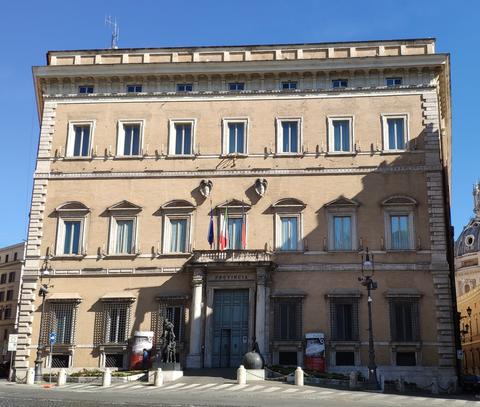
Domus Romane at Palazzo Valentini
An innovative underground archaeological site that brings the ruins of ancient Roman villas to life. Through a captivating multimedia show with light projections and virtual reconstructions, visitors can experience what these luxurious homes looked like in their prime.
/Doria%20Pamphilj%20Gallery%20(Galleria%20Doria%20Pamphilj).jpg)
Doria Pamphilj Gallery (Galleria Doria Pamphilj)
A large private art collection housed in the opulent Palazzo Doria Pamphilj. The gallery showcases a vast array of paintings, sculptures, and furniture, including Velázquez's famous portrait of Pope Innocent X.
/Janiculum%20Hill%20(Gianicolo).jpg)
Janiculum Hill (Gianicolo)
A hill offering one of the most spectacular panoramic views of Rome's skyline. Though not one of the seven traditional hills, it's a popular spot for a scenic walk, featuring monuments to Garibaldi and a daily cannon shot at noon.
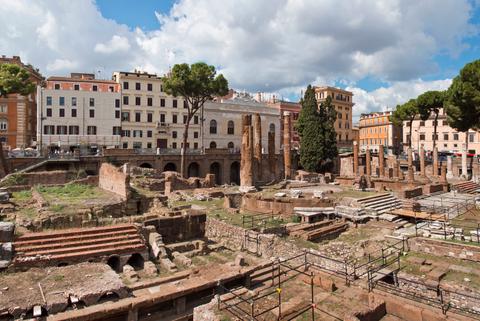
Largo di Torre Argentina
A square containing the ruins of four Republican-era Roman temples and the remains of Pompey's Theatre. This significant archaeological site is historically recognized as the location of Julius Caesar's assassination and is also famous for its modern-day cat sanctuary.
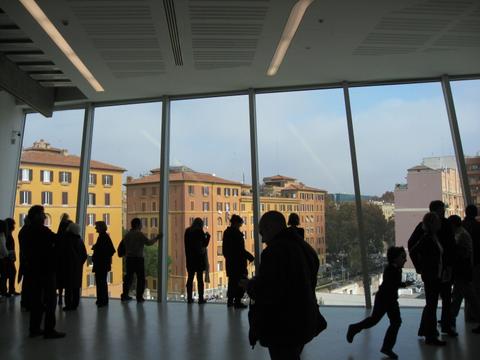
MAXXI - National Museum of 21st Century Arts
A national museum of contemporary art and architecture designed by the renowned architect Zaha Hadid. Its dynamic, futuristic building hosts a permanent collection and rotating exhibitions of cutting-edge art and architectural projects.
/National%20Gallery%20of%20Modern%20and%20Contemporary%20Art%20(GNAM).jpg)
National Gallery of Modern and Contemporary Art (GNAM)
Located near the Villa Borghese, this gallery houses Italy's largest collection of 19th and 20th-century art. It features works by Italian artists as well as international masters like Monet, Van Gogh, and Klimt.
/National%20Roman%20Museum%20(Museo%20Nazionale%20Romano).jpg)
National Roman Museum (Museo Nazionale Romano)
A museum spread across several sites that showcases the history and art of Rome from its origins to the late imperial age. Its branches include Palazzo Massimo alle Terme, Palazzo Altemps, the Crypta Balbi, and the Baths of Diocletian.
/Orange%20Garden%20(Giardino%20degli%20Aranci).jpg)
Orange Garden (Giardino degli Aranci)
A picturesque and tranquil garden located on the Aventine Hill, named for its many bitter orange trees. It is a favorite spot for locals and tourists alike, offering a breathtaking and romantic panoramic view of the city and St. Peter's Basilica.
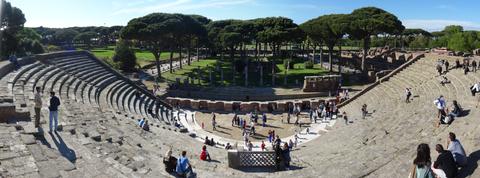
Ostia Antica
The ancient harbor city of Rome, now a vast and well-preserved archaeological park. Visitors can walk through the streets of an authentic ancient Roman town, exploring ruins of apartment buildings, temples, theaters, and mosaics.
/Palatine%20Hill%20(Palatino).jpg)
Palatine Hill (Palatino)
The centermost of the Seven Hills of Rome and one of the most ancient parts of the city, believed to be the location where Romulus and Remus were found. It later became the exclusive residential district for emperors and the aristocracy, and the ruins of their palaces are visible today.
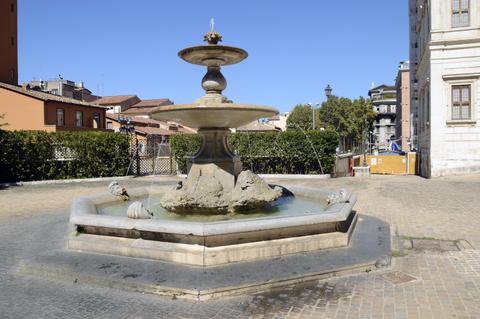
Palazzo Barberini
A magnificent 17th-century palace that is a masterpiece of Baroque architecture, with contributions from Maderno, Bernini, and Borromini. It houses the Galleria Nazionale d'Arte Antica, featuring masterpieces such as Raphael's 'La Fornarina' and Caravaggio's 'Judith Beheading Holofernes'.
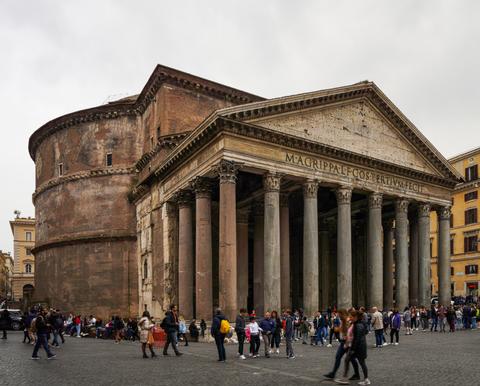
Pantheon
A former Roman temple, now a Catholic church, renowned for its architectural genius. It is one of the best-preserved of all Ancient Roman buildings, and its magnificent dome with its famous oculus is still the world's largest unreinforced concrete dome.
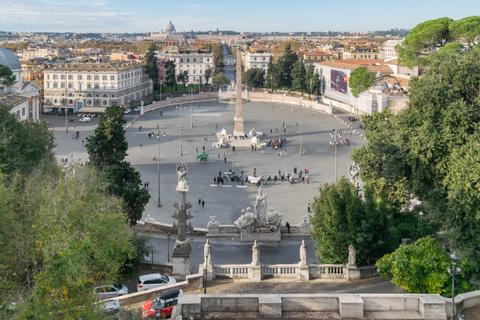
Piazza del Popolo
A large neoclassical square, historically the main entrance to the city of Rome. It is characterized by an ancient Egyptian obelisk in its center, twin Baroque churches, and fountains, serving as a grand urban space.
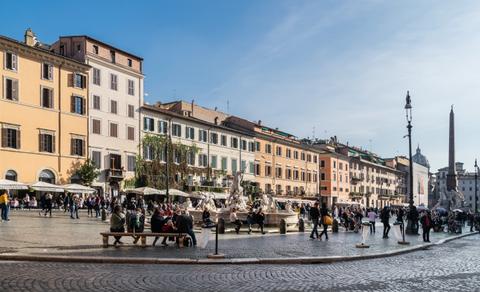
Piazza Navona
A famous and elegant Baroque square built on the site of the ancient Stadium of Domitian. It is adorned with three magnificent fountains, including Bernini's masterpiece, the Fontana dei Quattro Fiumi (Fountain of the Four Rivers).

Porta Portese Market
Rome's largest and most famous flea market, held every Sunday morning in the Trastevere neighborhood. It's a sprawling, bustling market where you can find everything from antiques and vintage clothing to books and household goods.
/Pyramid%20of%20Cestius%20(Piramide%20di%20Caio%20Cestio).jpg)
Pyramid of Cestius (Piramide di Caio Cestio)
An ancient Roman-era pyramid built as a tomb for a wealthy magistrate, Gaius Cestius, around 12 BC. This surprisingly well-preserved structure was later incorporated into the Aurelian Walls, which helped ensure its survival through the centuries.
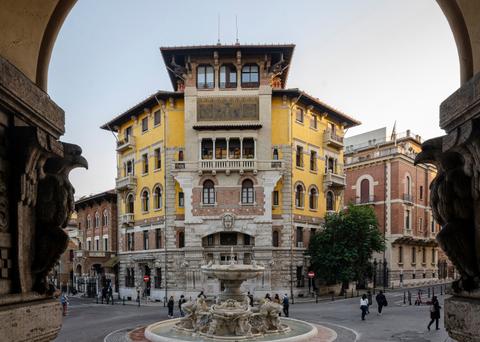
Quartiere Coppedè
A small, whimsical neighborhood known for its fantastical and eclectic architecture, designed by Gino Coppedè in the early 20th century. This hidden gem features a unique blend of Art Nouveau, Baroque, and medieval styles, creating a fairy-tale-like atmosphere.
/Quirinal%20Palace%20(Palazzo%20del%20Quirinale).jpg)
Quirinal Palace (Palazzo del Quirinale)
The official residence of the President of the Italian Republic, located on the highest of Rome's seven hills. This immense palace, formerly a papal and royal residence, is one of the largest in the world and is open for public tours.
/Roman%20Forum%20(Foro%20Romano).jpg)
Roman Forum (Foro Romano)
A rectangular plaza surrounded by the ruins of several important ancient government buildings at the center of the city. For centuries, this was the heart of ancient Rome, serving as the center for public life, commerce, and justice.
/Roman%20Ghetto%20(Ghetto%20Ebraico%20di%20Roma).jpg)
Roman Ghetto (Ghetto Ebraico di Roma)
One of the oldest Jewish communities in Europe, this historic neighborhood is a vibrant area rich in history and culture. It features the Great Synagogue of Rome, the Jewish Museum, and is renowned for its unique Roman-Jewish cuisine.
/Sistine%20Chapel%20(Cappella%20Sistina).jpg)
Sistine Chapel (Cappella Sistina)
Located within the Vatican Museums, this chapel is the official residence of the Pope and the site of the papal conclave. Its fame rests on its breathtaking Renaissance frescoes, particularly the ceiling and The Last Judgment by Michelangelo.
/Spanish%20Steps%20(Scalinata%20di%20Trinita%20dei%20Monti).jpg)
Spanish Steps (Scalinata di Trinità dei Monti)
A monumental stairway of 135 steps climbing a steep slope between the Piazza di Spagna at the base and Piazza Trinità dei Monti at the top. The 18th-century steps are a famous meeting point and offer beautiful views, especially during spring when adorned with azaleas.
/St.%20Peters%20Basilica%20(Basilica%20di%20San%20Pietro).jpg)
St. Peter's Basilica (Basilica di San Pietro)
A magnificent church in Vatican City, considered one of the holiest Catholic shrines and a masterpiece of Renaissance architecture. Designed by artists including Bramante, Michelangelo, and Bernini, it is one of the largest churches in the world and houses Michelangelo's Pietà.
/St.%20Peters%20Square%20(Piazza%20San%20Pietro).jpg)
St. Peter's Square (Piazza San Pietro)
A grand plaza located directly in front of St. Peter's Basilica, designed by Gian Lorenzo Bernini. The square is framed by massive Doric colonnades, meant to symbolize the embracing arms of the church, and features an ancient Egyptian obelisk at its center.
/Testaccio%20Market%20(Mercato%20di%20Testaccio).jpg)
Testaccio Market (Mercato di Testaccio)
A modern covered market in the foodie neighborhood of Testaccio, offering a mix of traditional produce stalls and gourmet street food. It's a fantastic place to experience authentic Roman flavors and culinary traditions.
/Trajans%20Market%20(Mercati%20di%20Traiano).jpg)
Trajan's Market (Mercati di Traiano)
A large complex of ruins considered to be the world's first shopping mall, built in the early 2nd century AD. The well-preserved structure now houses the Museum of the Imperial Fora, which illustrates the history of the ancient forums.
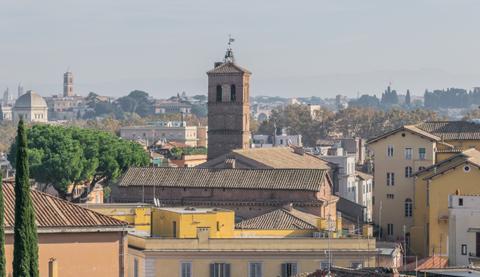
Trastevere
A charming and picturesque neighborhood on the west bank of the Tiber, known for its narrow cobblestone streets, medieval houses, and bohemian atmosphere. It is famous for its authentic trattorias, artisan shops, and vibrant nightlife.
/Trevi%20Fountain%20(Fontana%20di%20Trevi).jpg)
Trevi Fountain (Fontana di Trevi)
The largest Baroque fountain in the city and one of the most famous fountains in the world. This stunning masterpiece of art and engineering is a popular attraction where, according to legend, throwing a coin over your shoulder ensures your return to Rome.
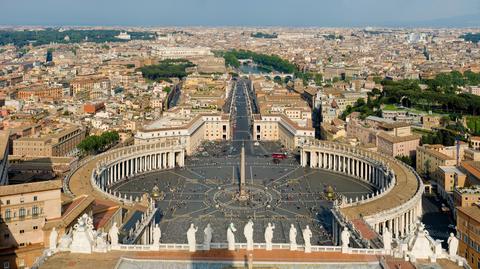
Vatican City
The smallest independent state in the world, located within Rome and serving as the headquarters of the Roman Catholic Church. It is a UNESCO World Heritage site in its entirety, home to the Pope and a treasure trove of iconic art and architecture.
/Vatican%20Museums%20(Musei%20Vaticani).jpg)
Vatican Museums (Musei Vaticani)
A complex of art and Christian museums located within the boundaries of the Vatican City. They display works from the immense collection amassed by the Catholic Church and the papacy throughout the centuries, including some of the world's most famous sculptures and Renaissance masterpieces.
/Victor%20Emmanuel%20II%20National%20Monument%20(Altare%20della%20Patria).jpg)
Victor Emmanuel II National Monument (Altare della Patria)
A massive white marble monument built to honor Victor Emmanuel II, the first king of a unified Italy. Often called the 'Altar of the Fatherland,' it houses the Tomb of the Unknown Soldier and offers panoramic city views from its rooftop terrace.
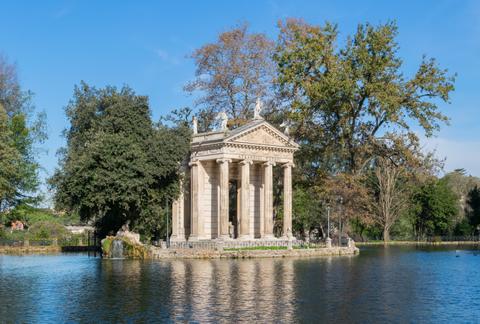
Villa Borghese Gardens
A vast and beautiful landscape garden, the third largest public park in Rome. It offers a peaceful retreat from the city's hustle and bustle, containing the Borghese Gallery, a lake, temples, fountains, and the Rome Zoo (Bioparco).
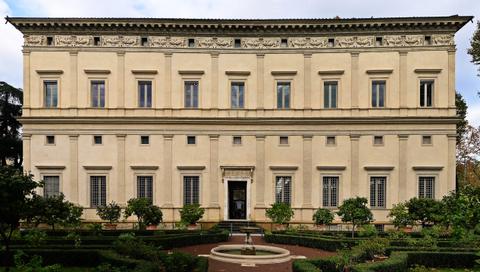
Villa Farnesina
A stunning Renaissance suburban villa in Trastevere, celebrated for its magnificent interior frescoes by Raphael and his workshop. The villa is a prime example of Renaissance architecture and art, offering a glimpse into the luxurious life of its original owner, the banker Agostino Chigi.
How Rafeek works in Rome
Download Rafeek
Get the app on iOS or Android and pick your destination.
Choose a guide
Browse the landmarks nearby and choose the ones you want.
Press play and walk
Listen as you go, at your own pace, online or offline.
About Rome
Rome is the capital city and most populated comune of Italy. It is also the administrative centre of the Lazio region and of the Metropolitan City of Rome. A special comune named Roma Capitale with a population of 2.7 million in an area of 1,287.36 km2 (497.1 mi2), Rome is the third most populous city in the European Union by population within city limits. The Metropolitan City of Rome Capital, with a population of 4.2 million, is the most populous metropolitan city in Italy. Its metropolitan area is the third-most populous within Italy. Rome is located in the central-western portion of the Italian Peninsula, within Lazio (Latium), along the shores of the Tiber Valley.
Simple pricing
Try Rafeek before you pay for anything.
Free
$0
Start with sample guides and browse every destination and landmark before you commit.
Full access
In-app
Unlock complete audio guides, offline listening, and every landmark in the city from inside the app.
Ready to explore Rome?
Download Rafeek and let every landmark tell you its story.