Spain · Europe
Discover Granada with Rafeek
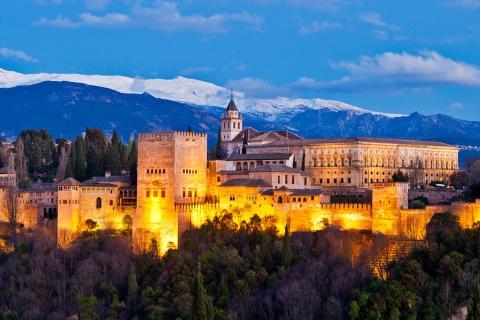
Granada is the capital city of the province of Granada, in the autonomous community of Andalusia, Spain.


Seeing Granada without the story is only half the trip
The problem
Group tours run on someone else's clock, printed signs say too little, and searching for context on your phone pulls you out of the moment. Most travellers leave Granada with photos but no sense of what they actually saw.
How Rafeek fixes it
Rafeek is a personal audio guide in your pocket. Press play at each landmark in Granada, listen at your own pace, and keep your eyes on the place instead of a screen. Guides work offline, so no roaming or signal worries.
What you'll discover in Granada
26 landmarks with their own audio guide — tap any one to read what you'll hear.
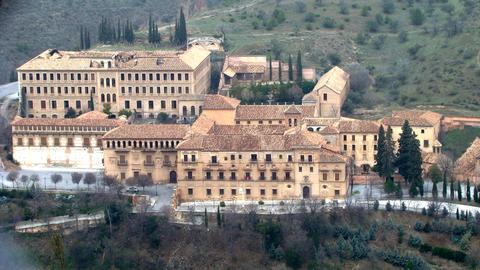
Abbey of Sacromonte
Founded in the 17th century, this abbey is a significant historical and religious complex located on Mount Valparaiso. It was built on the site where the relics of San Cecilio, the city's patron saint, were supposedly discovered. Visitors can explore the church, the museum, and the holy caves (catacombs) beneath the abbey.
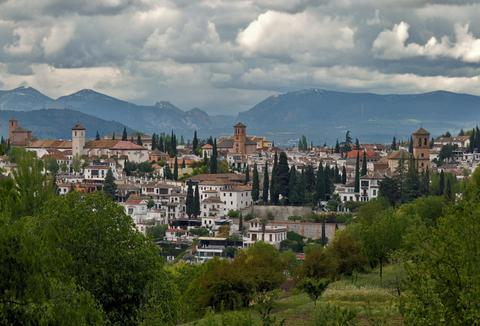
Albayzin
The historic Arab quarter of Granada, a UNESCO World Heritage site alongside the Alhambra. It is a captivating labyrinth of narrow, winding streets, traditional white-washed houses (carmenes), and charming plazas. The neighborhood offers the most famous and spectacular views of the Alhambra, especially from the Mirador de San Nicolas.
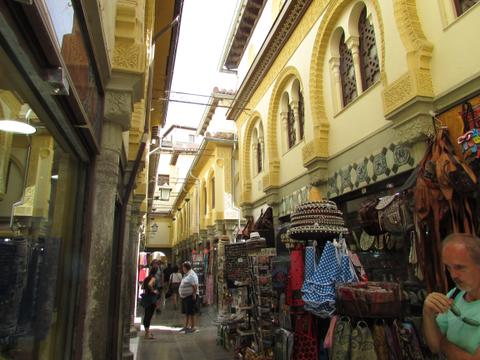
Alcaiceria Market
A historic market area located near the cathedral, which was originally the Great Bazaar of Granada where silk was made and sold. The original market was destroyed by fire in the 19th century, but it was rebuilt in a neo-Moorish style. Today, it is a vibrant network of narrow streets filled with shops selling souvenirs, crafts, and textiles.
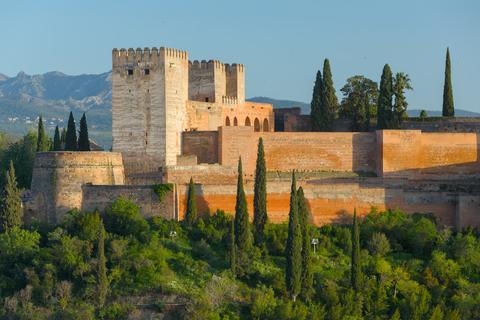
Alcazaba
The oldest part of the Alhambra, serving as its military fortress. Visitors can explore its ramparts, towers, and dungeons, which date back to the 13th century. Climbing the Torre de la Vela (Watchtower) provides some of the most commanding panoramic views over Granada, the Albayzin, and the Sierra Nevada mountains.
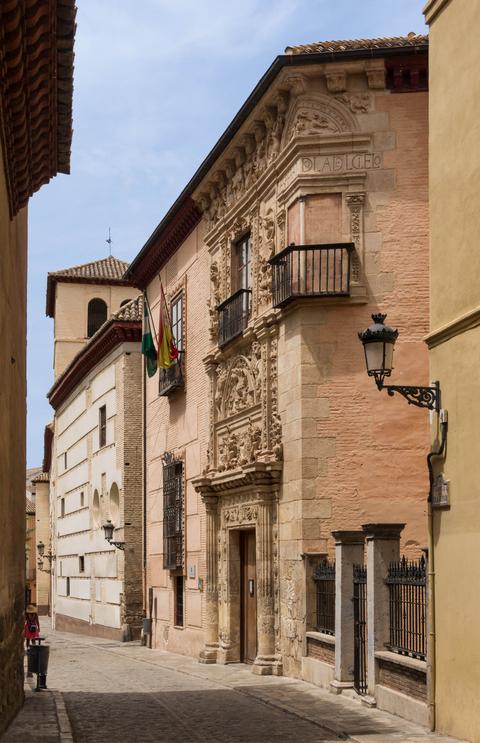
Archaeological Museum of Granada
Housed in the 16th-century Casa de Castril, this museum showcases a rich collection of artifacts from the province of Granada. The exhibits span from prehistoric times through the Phoenician, Roman, and Arab periods. Highlights include Iberian sculptures and a collection of Moorish ceramics and astrolabes.
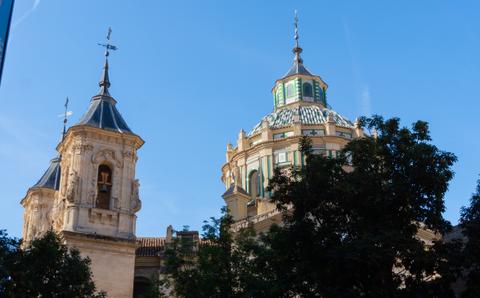
Basilica de San Juan de Dios
A spectacular Baroque church dedicated to St. John of God, the city's patron saint. Its interior is one of the most breathtaking in Spain, almost entirely covered in gold leaf, intricate carvings, and dramatic paintings. The magnificent main altarpiece and the chamber holding the saint's relics are particularly awe-inspiring.
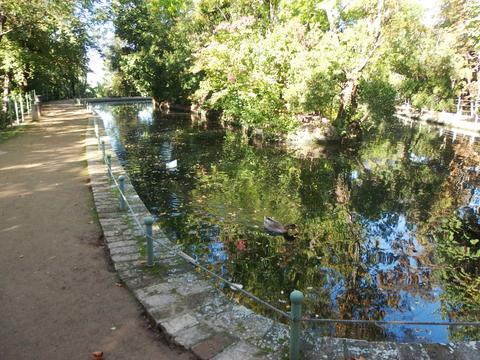
Carmen de los Martires
A beautiful and expansive garden located on the hill near the Alhambra. It is a peaceful oasis combining different styles, including a French Baroque garden, an English landscape garden, and a Nasrid-style patio with a pond. The gardens are home to resident peacocks and offer lovely views over the city.
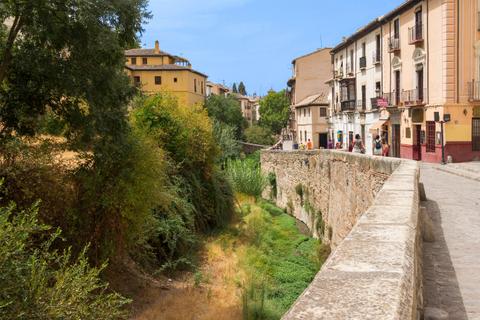
Carrera del Darro
One of the most picturesque and romantic streets in Granada, running along the left bank of the Darro River. The walk is flanked by historic buildings from the 16th and 17th centuries on one side and the river on the other, with two old stone bridges crossing it. It offers beautiful views up towards the Alhambra and the Albayzin.
/Cartuja%20Monastery%20(Monasterio%20de%20la%20Cartuja).jpg)
Cartuja Monastery (Monasterio de la Cartuja)
A Carthusian monastery considered to be a pinnacle of Spanish Baroque architecture. While its exterior is relatively plain, the interior is astonishingly ornate, particularly the church's sacristy, which is lavishly decorated with marble, stucco, and paintings. The sanctuary behind the main altar is another highlight of its extravagant design.
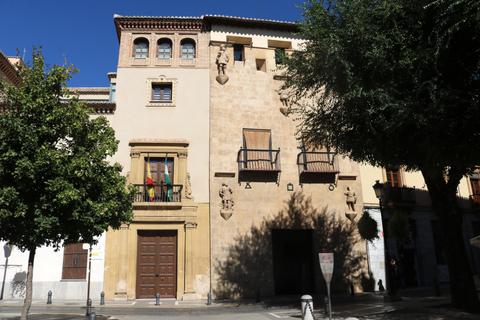
Casa de los Tiros Museum
A 16th-century building named for the muskets ('tiros') protruding from its battlements. The museum inside is dedicated to the history, art, and culture of Granada, with exhibits on local crafts, festivals, and historical figures. Its most famous room is the Cuadra Dorada, which features a magnificent coffered ceiling with portraits of Spanish heroes.
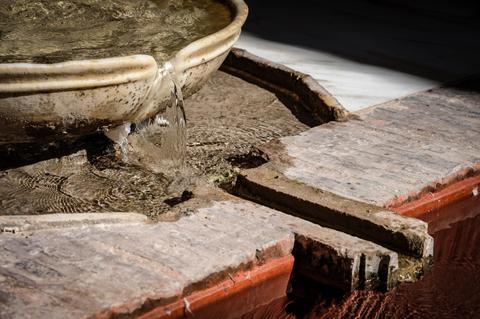
Casa de Zafra
A beautifully restored 14th-century Moorish house located in the Albayzin. It now serves as the Interpretation Center for the Albayzin, providing historical context for the UNESCO World Heritage site. The house itself is a prime example of a noble Nasrid dwelling, complete with a central courtyard and original decorative elements.
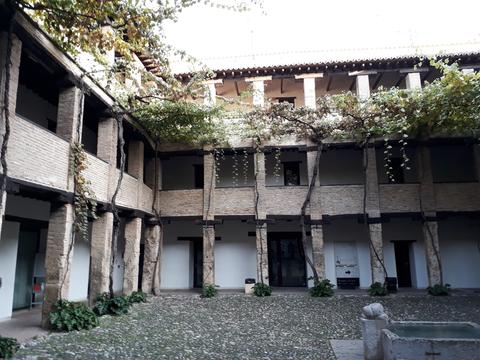
Corral del Carbon
The oldest completely preserved monument from the Nasrid period in Granada, dating to the 14th century. It originally served as a warehouse for goods and a shelter for merchants, functioning as a combined inn and warehouse. Its monumental carved entrance gate is a magnificent example of Islamic architecture, leading to a simple courtyard.
/El%20Banuelo%20(Arab%20Baths).jpg)
El Banuelo (Arab Baths)
One of the best-preserved and oldest public Arab baths (hammam) in Spain, dating back to the 11th century. Located along the Darro River, the baths feature several chambers with vaulted ceilings and distinctive star-shaped skylights for light and ventilation. This site offers a fascinating glimpse into the daily life and hygiene practices of Moorish Granada.
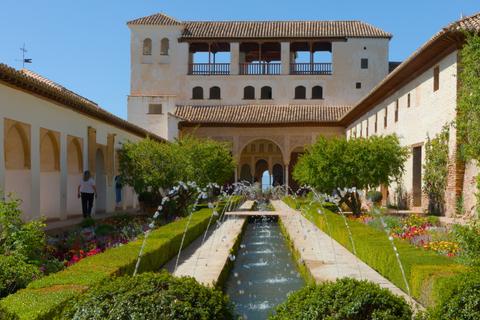
Generalife
The tranquil summer palace and country estate of the Nasrid rulers, located just east of the Alhambra. It is renowned for its magnificent gardens, which feature long pools, fountains, colonnades, and pavilions. The Patio de la Acequia (Court of the Water Channel) is a stunning example of medieval Persian gardens in Andalusia.
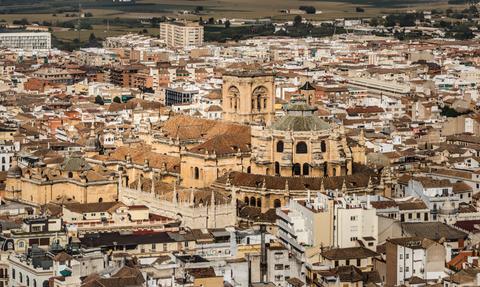
Granada Cathedral
A masterpiece of the Spanish Renaissance, this grand cathedral was built on the site of the former main mosque after the Christian reconquest. Its interior is vast and overwhelmingly white, creating a sense of immense space and light, and it features impressive grand chapels and two magnificent pipe organs. The cathedral is dedicated to the Incarnation of the Virgin Mary.
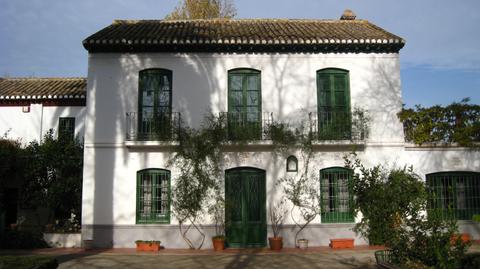
Huerta de San Vicente
The former summer home of the poet Federico Garcia Lorca and his family from 1926 to 1936. Now a museum, the house is preserved as it was when Lorca lived there, offering an intimate look into his life and work. The surrounding park, Parque Federico Garcia Lorca, is a popular public green space.
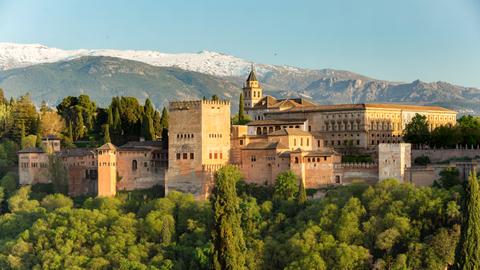
Mirador de San Nicolas
The most famous viewpoint in Granada, located in the heart of the Albayzin district. The plaza in front of the San Nicolas church offers an unforgettable, picture-perfect panoramic view of the Alhambra palace against the backdrop of the Sierra Nevada mountains. It is a lively spot, especially at sunset, often filled with musicians and artists.
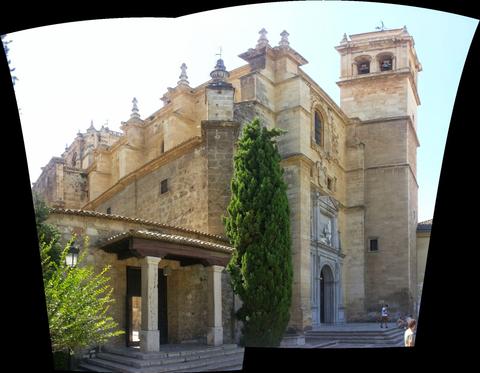
Monasterio de San Jeronimo
A stunning Hieronymite monastery founded by the Catholic Monarchs, considered one of the great Christian buildings of Granada. It is a masterpiece of Renaissance architecture, featuring a richly decorated church with an impressive altarpiece and a beautiful cloister garden. The monastery was the first in the world to be consecrated to the Immaculate Conception of Mary.
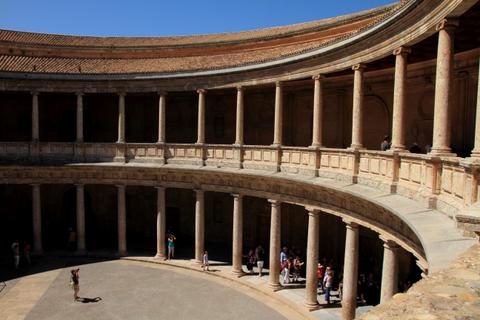
Museum of Fine Arts of Granada
Located on the upper floor of the Palace of Charles V within the Alhambra, this is the city's most important art gallery. Its collection focuses primarily on paintings and sculptures from Granada, dating from the 15th to the 20th century. The museum features significant works by artists such as Alonso Cano and Jose de Mora.
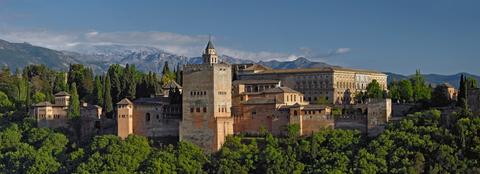
Nasrid Palaces
The magnificent heart of the Alhambra, comprising a complex of palaces that were the residence of the Nasrid kings of Granada. They are celebrated for their intricate stucco work, detailed tile mosaics (azulejos), and beautifully carved wooden ceilings. The Court of the Lions and the Court of the Myrtles are among the most iconic examples of this exquisite Islamic architecture.
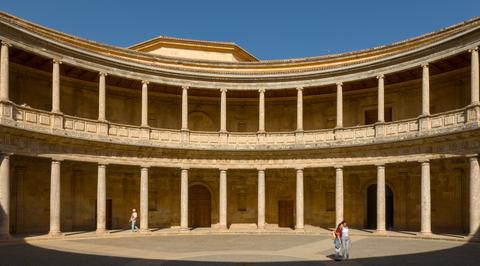
Palace of Charles V
A massive Renaissance palace located within the Alhambra complex, commissioned by the Holy Roman Emperor Charles V. Its imposing square facade and unique circular inner courtyard stand in stark architectural contrast to the delicate Moorish style of the surrounding Nasrid Palaces. The building now houses the Museum of Fine Arts of Granada.
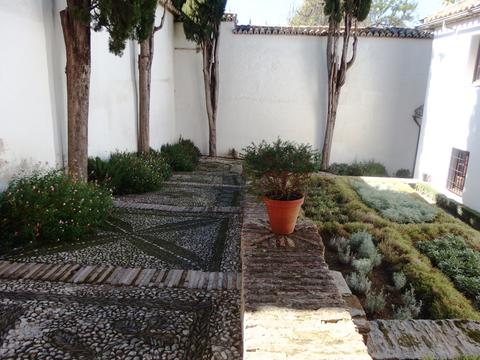
Palacio de Dar al-Horra
A 15th-century Nasrid palace located at the top of the Albayzin quarter. It was the residence of Aixa, the mother of Boabdil, the last Muslim king of Granada. The palace is a fine example of Moorish residential architecture, featuring a central courtyard with a pool and beautifully decorated rooms.
/Parque%20de%20las%20Ciencias%20(Science%20Park).jpg)
Parque de las Ciencias (Science Park)
An interactive science center and museum covering over 70,000 square meters, making it one of the most prominent in southern Spain. It features permanent exhibitions on the human body and scientific principles, a planetarium, a tropical butterfly house, and an observation tower. The museum is designed to be engaging for all ages.
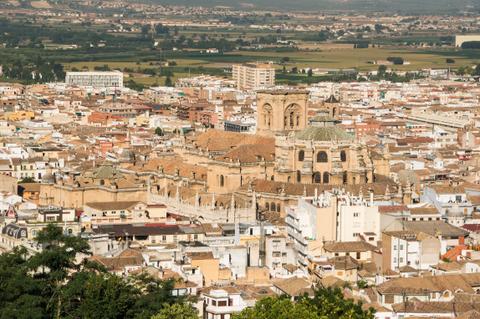
Royal Chapel of Granada
An Isabelline style building, attached to the Granada Cathedral, which was commissioned by the Catholic Monarchs. It serves as the burial place for Queen Isabella I of Castile and King Ferdinand II of Aragon, along with their daughter Joanna of Castile and her husband Philip I. The chapel also houses a museum with Isabella's personal art collection.
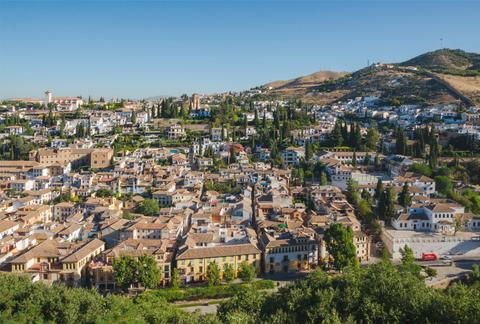
Sacromonte
A traditional neighborhood famous for its cave dwellings, which were historically inhabited by the city's Gitano community. Today, Sacromonte is renowned as a cradle of flamenco, with many caves hosting nightly 'zambra' flamenco shows for visitors. The Abbey of Sacromonte, overlooking the district, is also a significant historical and religious site.
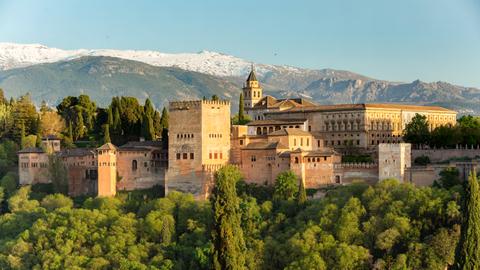
The Alhambra
A breathtaking palace and fortress complex of the Nasrid dynasty, representing the pinnacle of Moorish art in its final European outpost. This sprawling hilltop citadel includes the ornate Nasrid Palaces, the ancient Alcazaba fortress, and the Renaissance Palace of Charles V. It is a UNESCO World Heritage site and Spain's most visited monument.
How Rafeek works in Granada
Download Rafeek
Get the app on iOS or Android and pick your destination.
Choose a guide
Browse the landmarks nearby and choose the ones you want.
Press play and walk
Listen as you go, at your own pace, online or offline.
About Granada
Granada is the capital city of the province of Granada, in the autonomous community of Andalusia, Spain. Granada is located at the foot of the Sierra Nevada mountains, at the confluence of four rivers, the Darro, the Genil, the Monachil and the Beiro. Ascribed to the Vega de Granada comarca, the city sits at an average elevation of 738 m (2,421 ft) above sea level 50 km from the Mediterranean coast, the Costa Tropical. With a population of 233,532 as of 2024, it is the 20th-largest city in Spain and is an important wine growing region It was the last Muslim stronghold in Islamic Spain.
Simple pricing
Try Rafeek before you pay for anything.
Free
$0
Start with sample guides and browse every destination and landmark before you commit.
Full access
In-app
Unlock complete audio guides, offline listening, and every landmark in the city from inside the app.
Ready to explore Granada?
Download Rafeek and let every landmark tell you its story.