Just beyond Cairo’s busy streets, the Giza Plateau offers one of the most remarkable encounters with the ancient world. The Pyramids of Giza are more than a famous postcard view: they reveal how ancient Egyptians understood kingship, engineering, belief, and the journey into the afterlife. Here’s what to look for, and how to make the most of your visit.
Why were the Pyramids of Giza built?
The three principal pyramids were royal tombs built during Egypt’s Fourth Dynasty, roughly 4,500 years ago. They belonged to pharaohs Khufu, Khafre, and Menkaure. Each pyramid formed part of a wider funerary complex, with temples, causeways, and smaller burials. Their monumental scale reflected the importance of royal burial and the king’s hoped-for eternal life.
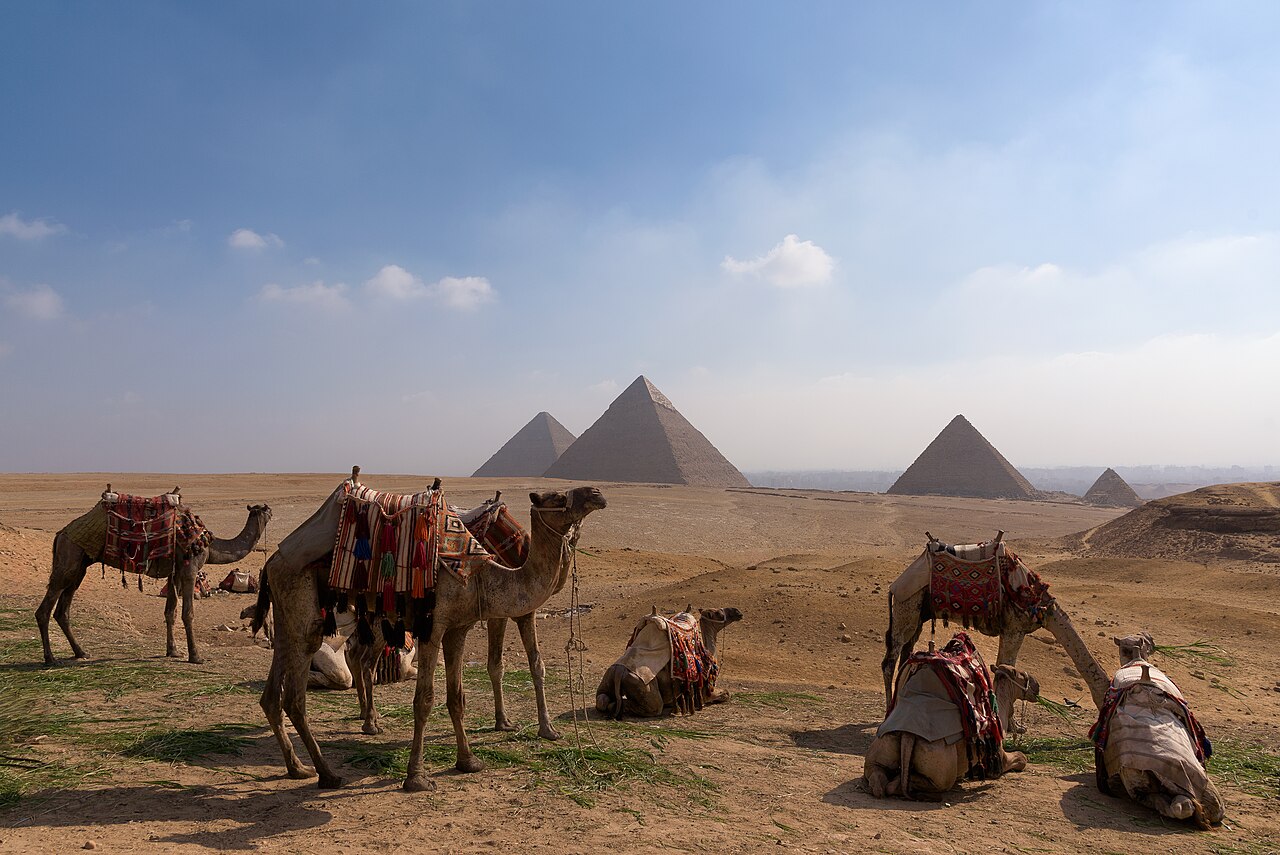
Meet the three great pyramids
The Great Pyramid of Khufu
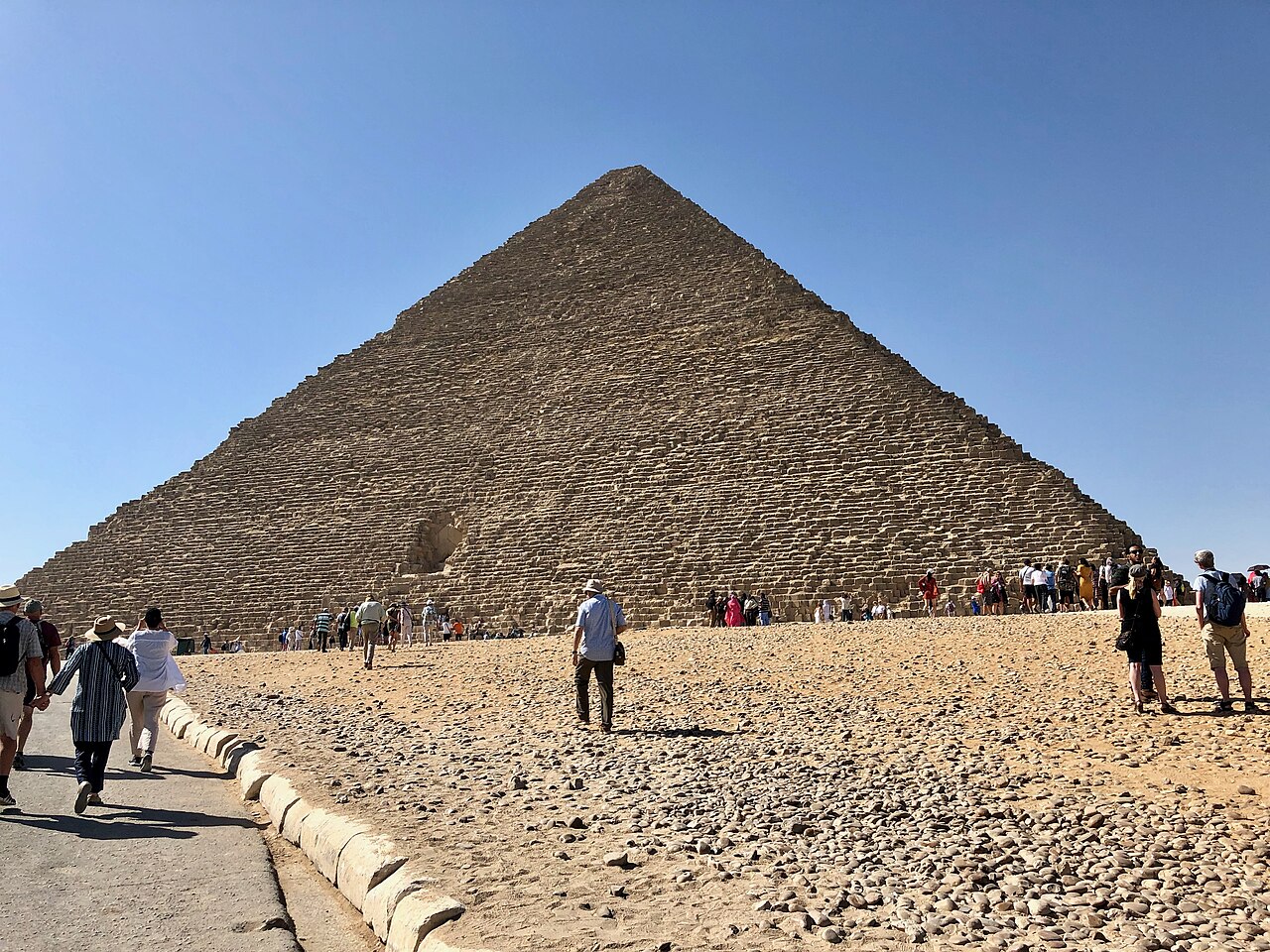
Built for Pharaoh Khufu, the Great Pyramid is the oldest and largest of the three. It originally rose to approximately 146.6 metres and was the tallest human-made structure in the world for millennia. Much of its smooth white limestone casing is now gone, leaving the stepped stonework visible today. Its scale becomes especially striking when you stand beside the enormous blocks near its base.
The Pyramid of Khafre
Khafre’s pyramid sometimes looks taller than Khufu’s because it stands on slightly higher ground. A section of its original casing remains near the top, providing a glimpse of how the pyramids once appeared. From certain viewpoints, the Great Sphinx appears in the same sightline as Khafre’s complex.
The Pyramid of Menkaure
The smallest of the three main pyramids was built for Menkaure. Its more modest height does not make it less fascinating: the surrounding remains reveal how the pyramid was one part of a much larger ceremonial landscape.
The Great Sphinx: Guardian of the Plateau
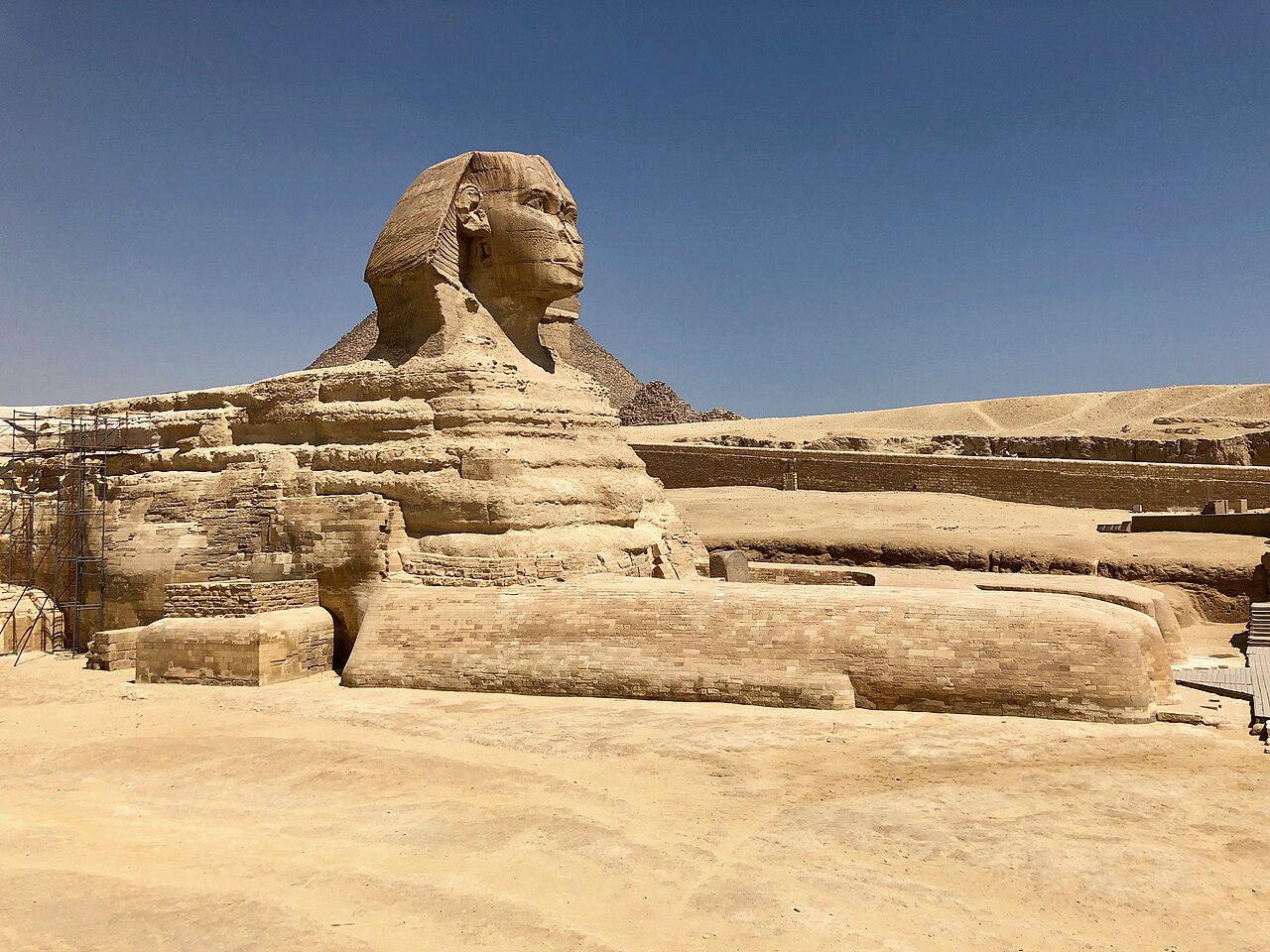
Near Khafre’s valley temple sits the Great Sphinx, a monumental limestone statue with a lion’s body and a human head. It is generally associated with the reign of Khafre, although some questions about its history are still debated. Pause here to notice how the statue was carved from the bedrock rather than built from stacked masonry like the pyramids.
Look beyond the iconic photograph
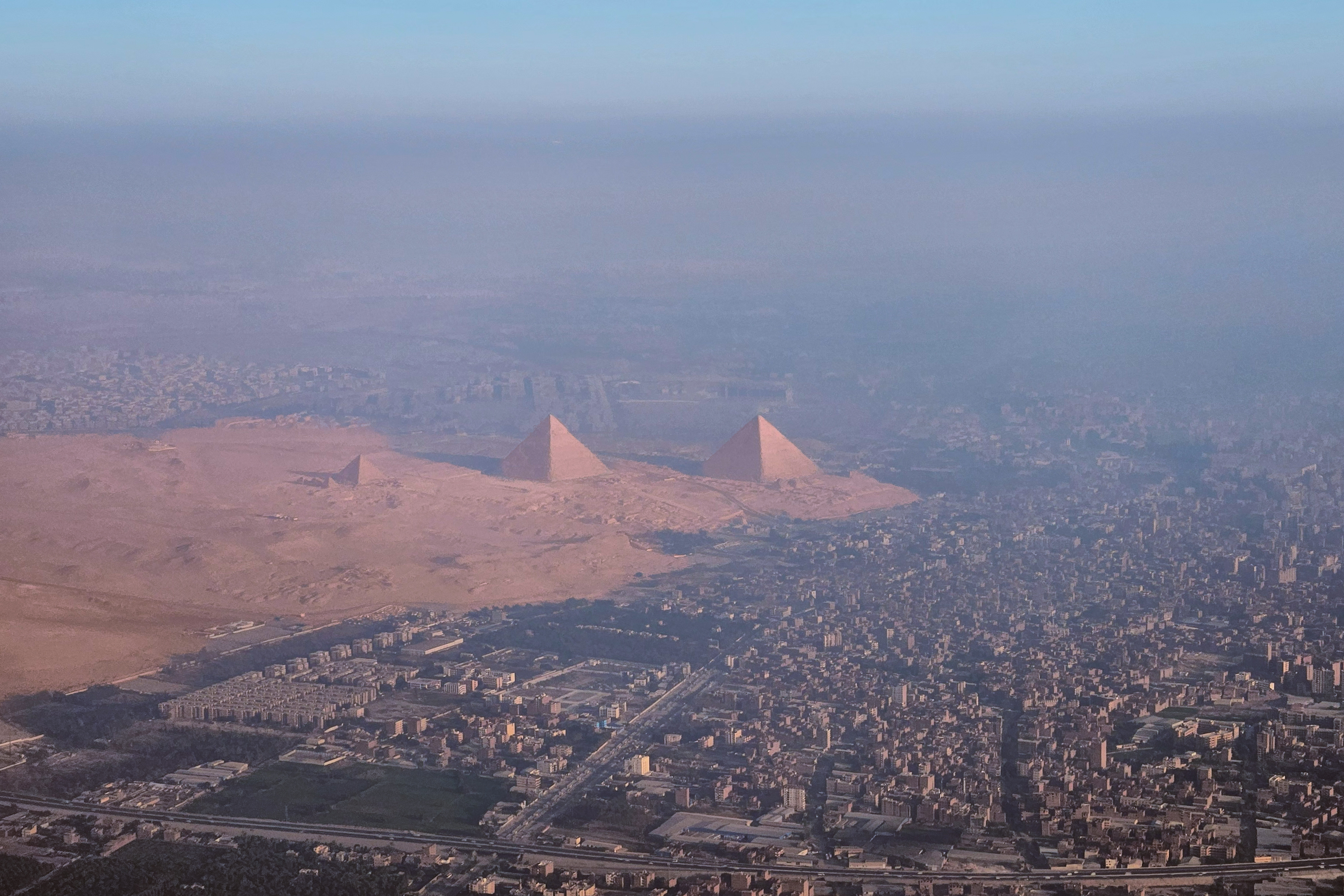
Giza is an entire archaeological landscape, not simply three isolated monuments. Look for the remains of funerary temples, ancient causeways, smaller queens’ pyramids, and the wider desert plateau. The surrounding city is also part of the modern experience: these ancient structures stand close to the living metropolis of Greater Cairo.
Practical tips for visiting the Giza Pyramids
- Start early: Morning visits can be more comfortable, especially in warmer months.
- Wear practical shoes: Expect uneven stone paths, sand, and considerable walking.
- Bring water and sun protection: Shade is limited across much of the plateau.
- Check current admission options: Plateau entry and entry inside individual pyramids can involve separate tickets; access, pricing, and opening hours may change.
- Ask before photographing people: Respect guides, staff, and other visitors; agree on any paid services in advance.
- Give yourself time: A few hours allows you to appreciate the main monuments, while a longer visit offers room for quieter viewpoints.
When is the best time to visit?
The cooler months, generally from autumn to spring, are often more comfortable for walking. Regardless of season, early daylight usually makes the site easier to explore. Check the weather and the latest official visiting information before traveling.
Why the pyramids still matter
Few places make history feel as immediate as Giza. The pyramids were created by an ancient society with extraordinary organizational and technical capabilities, and they continue to invite questions about human ambition, memory, and ingenuity. Rather than rushing from one photo stop to another, take a moment to look at the stonework, the surrounding landscape, and the sheer distances involved.
Image credits and reuse rights
All four photographs in this article are sourced from Wikimedia Commons file pages identified as CC0 / public-domain dedication and have been copied into Rafeek’s article-image library. Source files: Giza pyramids and camels, Great Pyramid, Great Sphinx, and Aerial view. Source-page license information should be retained for editorial records.