Poland · Europe
Discover Krakow with Rafeek
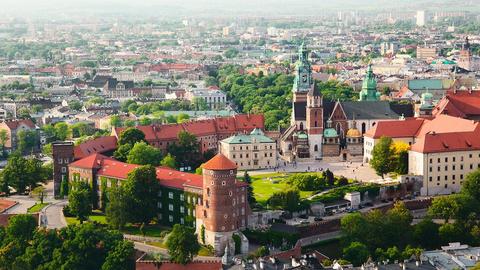
Kraków, officially the Royal Capital City of Kraków, is the second-largest and one of the oldest cities in Poland.


Seeing Krakow without the story is only half the trip
The problem
Group tours run on someone else's clock, printed signs say too little, and searching for context on your phone pulls you out of the moment. Most travellers leave Krakow with photos but no sense of what they actually saw.
How Rafeek fixes it
Rafeek is a personal audio guide in your pocket. Press play at each landmark in Krakow, listen at your own pace, and keep your eyes on the place instead of a screen. Guides work offline, so no roaming or signal worries.
What you'll discover in Krakow
40 landmarks with their own audio guide — tap any one to read what you'll hear.
Auschwitz-Birkenau Memorial and Museum
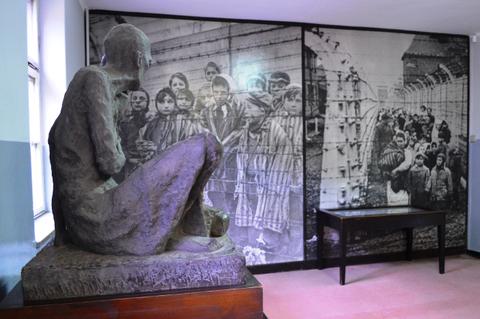
The site of the former German Nazi concentration and extermination camp, located in the nearby town of Oswiecim. It serves as a global memorial and museum, preserving the memory of the victims and serving as a poignant reminder of the Holocaust.
Bernatek Footbridge
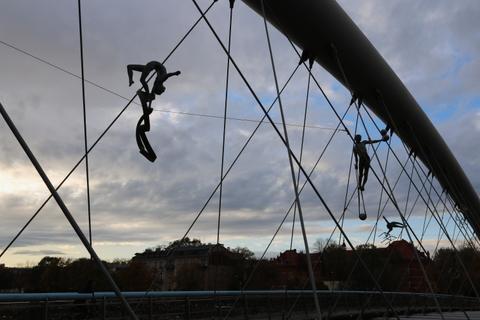
A pedestrian and cyclist bridge over the Vistula River, connecting the districts of Kazimierz and Podgorze. It is known for its acrobatic sculptures suspended from its arches and the thousands of 'love locks' attached to its railings by couples.
Botanic Garden of the Jagiellonian University
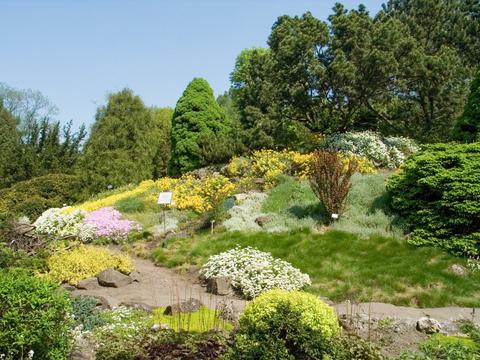
The oldest botanical garden in Poland, founded in 1783 as a research and teaching facility. It features a vast collection of over 5,000 plant species from around the world, historic greenhouses, and a museum.
/Cloth%20Hall%20(Sukiennice).jpg)
Cloth Hall (Sukiennice)
A Renaissance-era landmark in the center of the Main Market Square that was once a major center of international trade. Today, its ground floor houses souvenir stalls, while the upper floor is home to the Gallery of 19th-Century Polish Art.
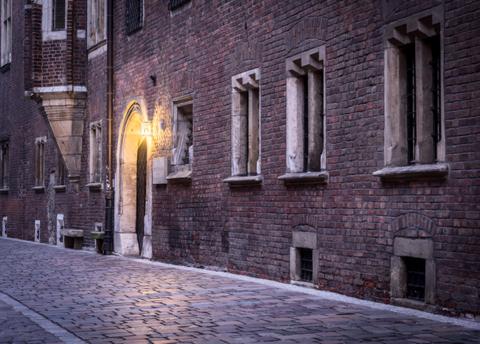
Collegium Maius
The Jagiellonian University's oldest building, dating back to the 14th century, where Nicolaus Copernicus once studied. Visitors can tour its historic lecture halls, library, and professors' quarters, which have been preserved in their 15th-century style.
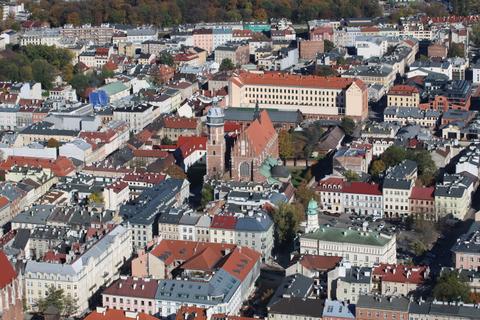
Corpus Christi Basilica
A Gothic church in the Kazimierz district, founded in the 14th century by King Casimir III the Great. It combines Gothic architecture with a lavish Baroque interior, including a massive high altar and an ornate boat-shaped pulpit.
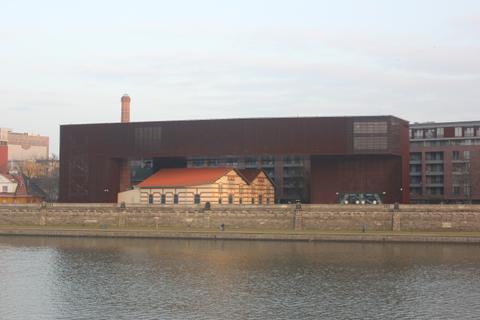
Cricoteka
A modern museum and cultural center dedicated to the life and work of Tadeusz Kantor, an influential Polish theatre director and artist. The building itself is an architectural landmark on the Vistula riverbank, reflecting Kantor's artistic ideas.
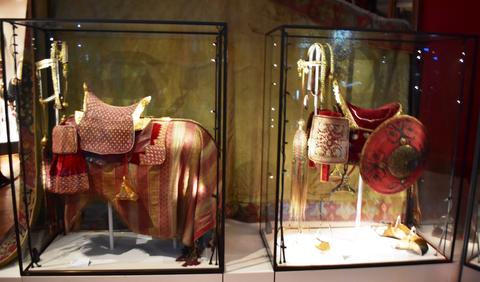
Czartoryski Museum
A branch of the National Museum, housing the priceless art collection of the Czartoryski family. Its most famous masterpiece is Leonardo da Vinci's 'Lady with an Ermine,' alongside works by Rembrandt and other European masters.
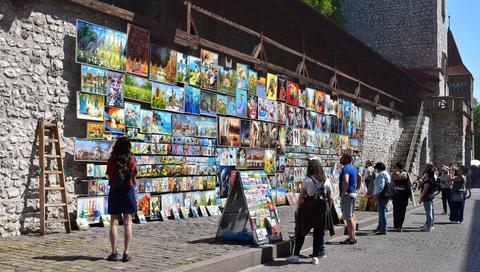
Florian's Gate
A Polish Gothic tower and a prominent landmark of Krakow's Old Town, built in the 14th century. It was the main entryway to the city and the starting point of the Royal Route which led to Wawel Castle.
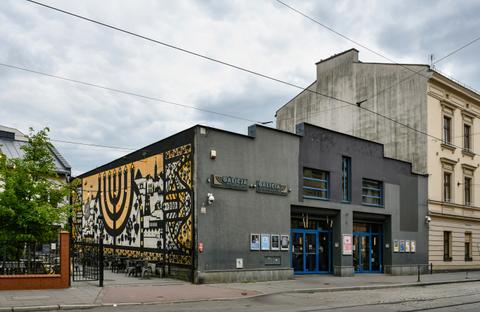
Galicia Jewish Museum
A museum located in the Kazimierz district, commemorating the victims of the Holocaust and celebrating the Jewish culture of Polish Galicia. It presents Jewish history from a unique perspective through contemporary photography exhibitions.
/Ghetto%20Heroes%20Square%20(Plac%20Bohaterow%20Getta).jpg)
Ghetto Heroes Square (Plac Bohaterow Getta)
The main square of the former Krakow Ghetto in the Podgorze district, the site of deportations during the Holocaust. It features a unique memorial of 70 oversized bronze chairs, symbolizing the tragic departure and absence of the ghetto's Jewish inhabitants.
/Home%20Army%20Museum%20(Muzeum%20Armii%20Krajowej).jpg)
Home Army Museum (Muzeum Armii Krajowej)
A museum dedicated to the Polish Underground State and its armed wing, the Home Army, during World War II. Housed in a renovated part of a 19th-century Austrian fort, it presents the struggle for Polish independence through a vast collection of artifacts.
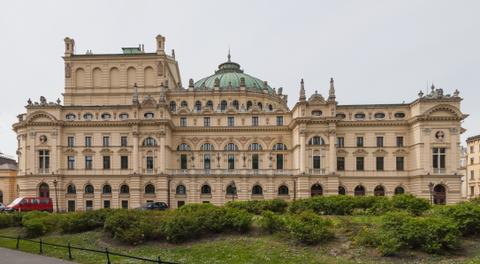
Juliusz Slowacki Theatre
A 19th-century Eclectic-style theatre modeled after the Paris Opera, considered one of the most beautiful in Europe. It is a prestigious venue that has played a vital role in the history of Polish culture and the Young Poland movement.
/Kazimierz%20(The%20Former%20Jewish%20District).jpg)
Kazimierz (The Former Jewish District)
A historical district of Krakow, south of the Old Town, which was the center of Jewish life for over 500 years. Today, it is a vibrant, bohemian neighborhood with historic synagogues, unique art galleries, and atmospheric cafes.
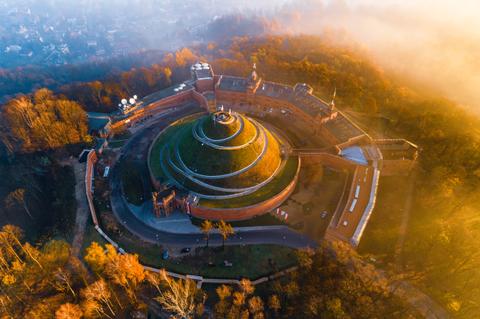
Kosciuszko Mound
An artificial mound erected in the 1820s to commemorate Polish national hero Tadeusz Kosciuszko. Visitors can walk a spiral path to the top for panoramic views of the city, surrounded by a 19th-century brick fort.
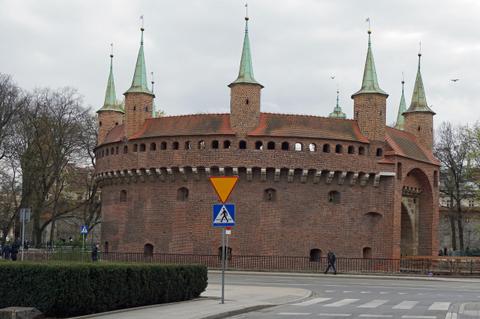
Krakow Barbican
A fortified outpost once connected to the city walls, it is a historic gateway leading into the Old Town. This Gothic masterpiece is one of the few remaining relics of the complex network of fortifications that once encircled the city.
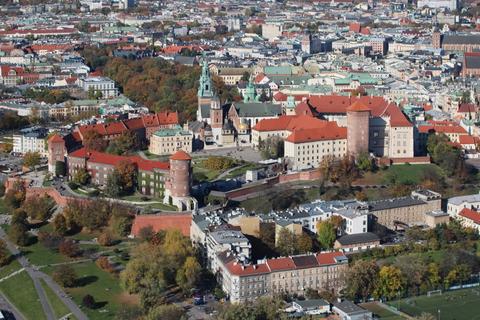
Krakow's Historic Centre
The entire Old Town, Wawel Hill, and Kazimierz district complex, designated as one of the first UNESCO World Heritage Sites in 1978. It is a beautifully preserved area that reflects 1,000 years of Polish history, culture, and architecture.
/Main%20Market%20Square%20(Rynek%20Glowny).jpg)
Main Market Square (Rynek Glowny)
The principal urban space located at the center of the city's Old Town, dating back to the 13th century. It is one of the largest medieval town squares in Europe and a bustling hub of public life, surrounded by historic townhouses and palaces.
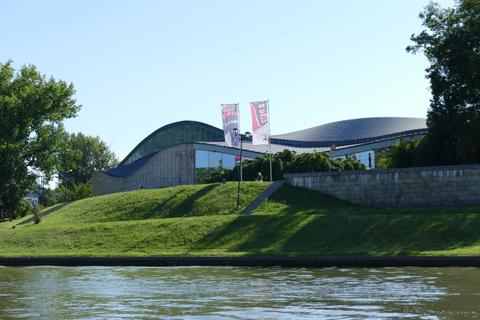
Manggha Museum of Japanese Art and Technology
A museum located on the banks of the Vistula River, opposite Wawel Castle, with a distinctive modern design. It was founded by film director Andrzej Wajda and features a collection of Japanese art and hosts various temporary exhibitions.
/Museum%20of%20Contemporary%20Art%20in%20Krakow%20(MOCAK).jpg)
Museum of Contemporary Art in Krakow (MOCAK)
Situated on the site of Schindler's Factory, this museum focuses on contemporary art from the last two decades. It presents the work of both Polish and international artists through its permanent collection and temporary exhibitions.
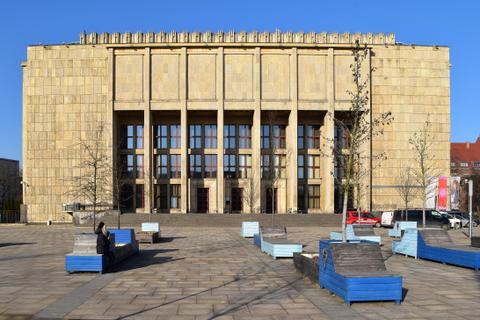
National Museum in Krakow
The main branch of Poland's National Museum, with a rich collection of Polish art from various periods. Its most famous exhibit is Leonardo da Vinci's masterpiece, 'Lady with an Ermine'.
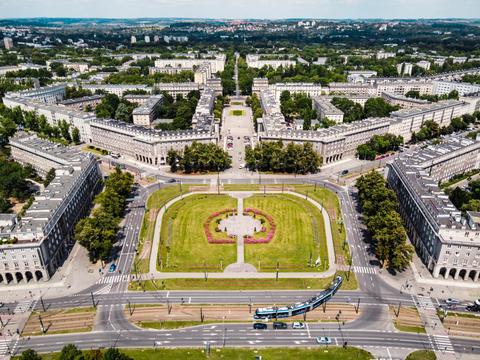
Nowa Huta District
A district of Krakow built in the 1950s as a model socialist city, intended to be a counterweight to the city's intellectual center. It is a unique example of central-planning and Socialist Realist architecture, offering a glimpse into life during the communist era.
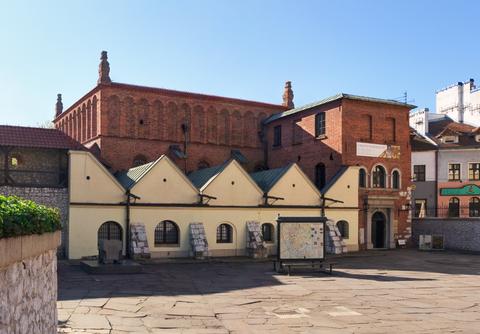
Old Synagogue
The oldest synagogue building still standing in Poland, located in the heart of Kazimierz. It now functions as a museum, housing a collection of Judaica and showcasing the history and traditions of Krakow's Jews.
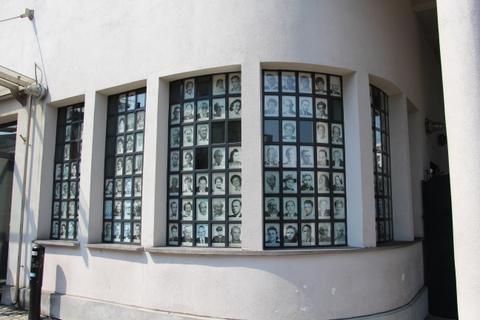
Oskar Schindler's Enamel Factory
A former factory that now hosts a powerful museum dedicated to the wartime experiences in Krakow under the Nazi occupation during World War II. It tells the story of the city and its inhabitants, including Oskar Schindler and the Jewish prisoners he saved.
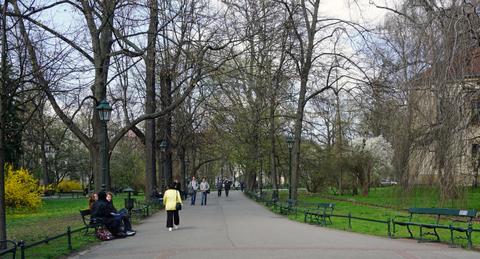
Planty Park
One of the largest city parks in Krakow, a green belt that encircles the Old Town. It was established in the early 19th century on the site of the medieval city walls and is a popular spot for walks and relaxation.
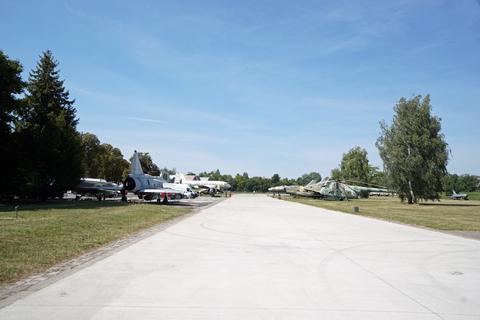
Polish Aviation Museum
Located at a historic airfield, this is one of the world's great aviation museums. It features a vast collection of aircraft, gliders, helicopters, and engines, spanning the entire history of flight.
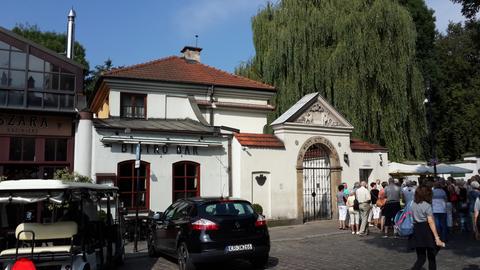
Remuh Synagogue
A small 16th-century Renaissance synagogue in Kazimierz that is still an active place of worship. Adjacent to it is the Old Jewish Cemetery, one of the oldest in Poland, with tombstones dating back to the 16th century.
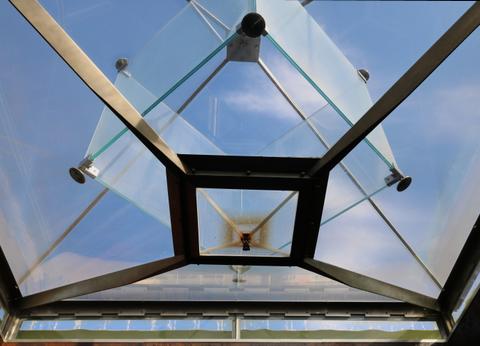
Rynek Underground Museum
A modern, high-tech museum located four meters beneath the Main Market Square. It presents the city's turbulent history through archaeological findings, reconstructions, and multimedia displays, showing what life was like in medieval Krakow.
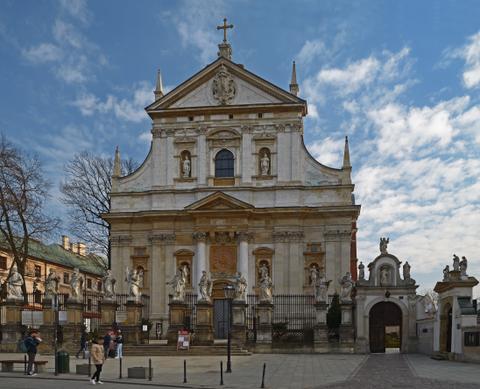
Saints Peter and Paul Church
A Roman Catholic Polish Baroque church located in the Old Town, notable for being the first Baroque structure in Krakow. It is known for its impressive facade with statues of the twelve apostles and a Foucault pendulum inside that demonstrates the Earth's rotation.
/Skalka%20(Church%20on%20the%20Rock).jpg)
Skalka (Church on the Rock)
A sacred complex of a church and monastery, known as the site where St. Stanislaus, Bishop of Krakow, was martyred in the 11th century. It also serves as a national pantheon, with a crypt housing the remains of many distinguished Poles.
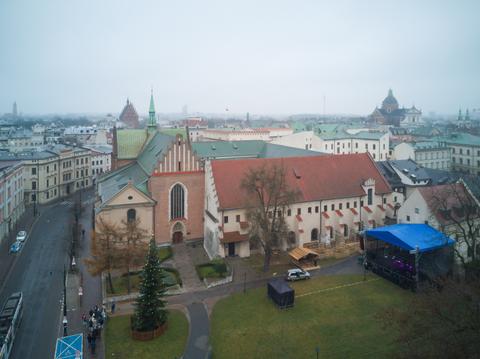
St. Francis' Basilica
A Roman Catholic church and monastery of the Franciscan order, known for its stunning Art Nouveau interiors. The church features magnificent stained-glass windows and floral murals designed by the celebrated artist Stanislaw Wyspianski.
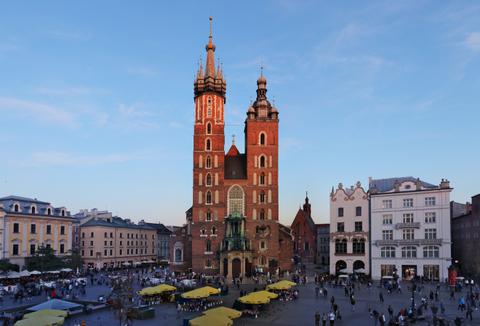
St. Mary's Basilica
A Brick Gothic church adjacent to the Main Market Square, famed for its magnificent wooden altarpiece carved by Veit Stoss. A trumpet signal, called the Hejnal Mariacki, is played every hour from the top of the taller of its two towers.
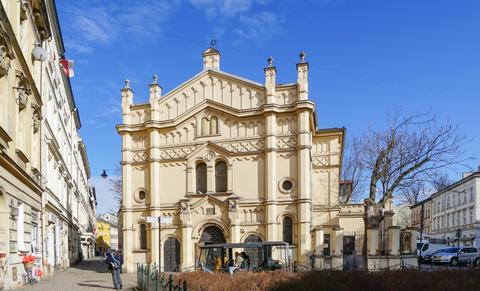
Tempel Synagogue
A 19th-century synagogue in Kazimierz known for its beautiful Moorish Revival architecture and richly decorated interior. It is a center of Progressive Judaism and hosts concerts and cultural events, particularly during the Jewish Culture Festival.
/The%20Eagle%20Pharmacy%20(Apteka%20Pod%20Orlem).jpg)
The Eagle Pharmacy (Apteka Pod Orlem)
A museum located on Ghetto Heroes Square, housed in the only pharmacy that operated within the Krakow Ghetto. It tells the story of its non-Jewish owner, Tadeusz Pankiewicz, who risked his life to help the ghetto's residents.
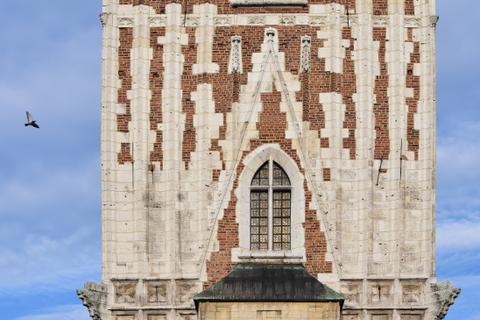
Town Hall Tower
The only remaining part of the old Krakow Town Hall, which was demolished in 1820. Visitors can climb the 70-meter Gothic tower for a close-up view of the Main Market Square and explore a small exhibition inside.
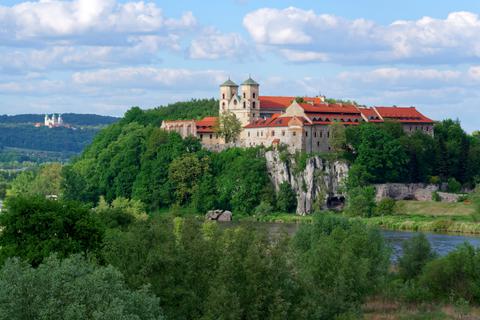
Tyniec Abbey
A historic Benedictine monastery perched on a limestone cliff overlooking the Vistula River on the outskirts of Krakow. Founded in the 11th century, it is a working monastery that is open to visitors and offers beautiful views and a museum.
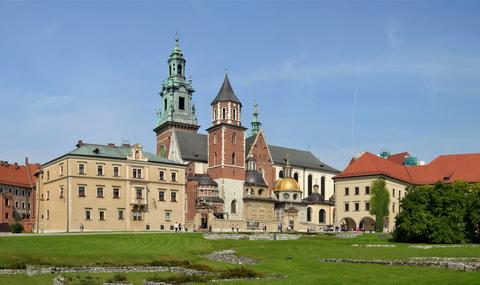
Wawel Cathedral
The Polish national sanctuary, located on Wawel Hill, which has served as the coronation site of Polish monarchs. It is the final resting place for many Polish kings, national heroes, and poets, making it Poland's most important national and religious monument.
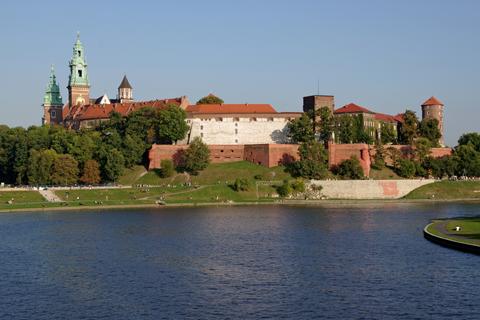
Wawel Royal Castle
A castle residency located in central Krakow, representing nearly all European architectural styles of medieval, renaissance and baroque periods. For centuries it was the residence of the kings of Poland and the symbol of Polish statehood, now operating as one of the country's premier art museums.
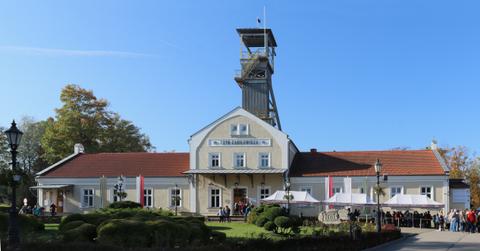
Wieliczka Salt Mine
A UNESCO World Heritage site located just outside Krakow, in operation continuously since the 13th century. It features a breathtaking labyrinth of tunnels, an underground lake, and four chapels with altars and figures carved out of the rock salt by miners.
/Wolski%20Forest%20(Las%20Wolski).jpg)
Wolski Forest (Las Wolski)
A large forest park on the west side of Krakow, offering numerous walking and cycling trails through natural woodland. It contains the Krakow Zoo, Pilsudski's Mound, and the secluded Camaldolese Monastery.
How Rafeek works in Krakow
Download Rafeek
Get the app on iOS or Android and pick your destination.
Choose a guide
Browse the landmarks nearby and choose the ones you want.
Press play and walk
Listen as you go, at your own pace, online or offline.
About Krakow
Kraków, officially the Royal Capital City of Kraków, is the second-largest and one of the oldest cities in Poland. Situated on the Vistula River in Lesser Poland Voivodeship, the city has a population of 816,614 (2025), with 1,428,363 people living in the Kraków metropolitan area. Kraków was the official capital of Poland until 1596 and has traditionally been one of the leading centres of Polish economic, academic, cultural, and artistic life. Its Old Town was declared a UNESCO World Heritage Site in 1978, one of the world's first sites granted the status.
Simple pricing
Try Rafeek before you pay for anything.
Free
$0
Start with sample guides and browse every destination and landmark before you commit.
Full access
In-app
Unlock complete audio guides, offline listening, and every landmark in the city from inside the app.
Ready to explore Krakow?
Download Rafeek and let every landmark tell you its story.